
Why Cash Flow Matters: How Good Bookkeeping Helps Small Businesses Stay Ahead
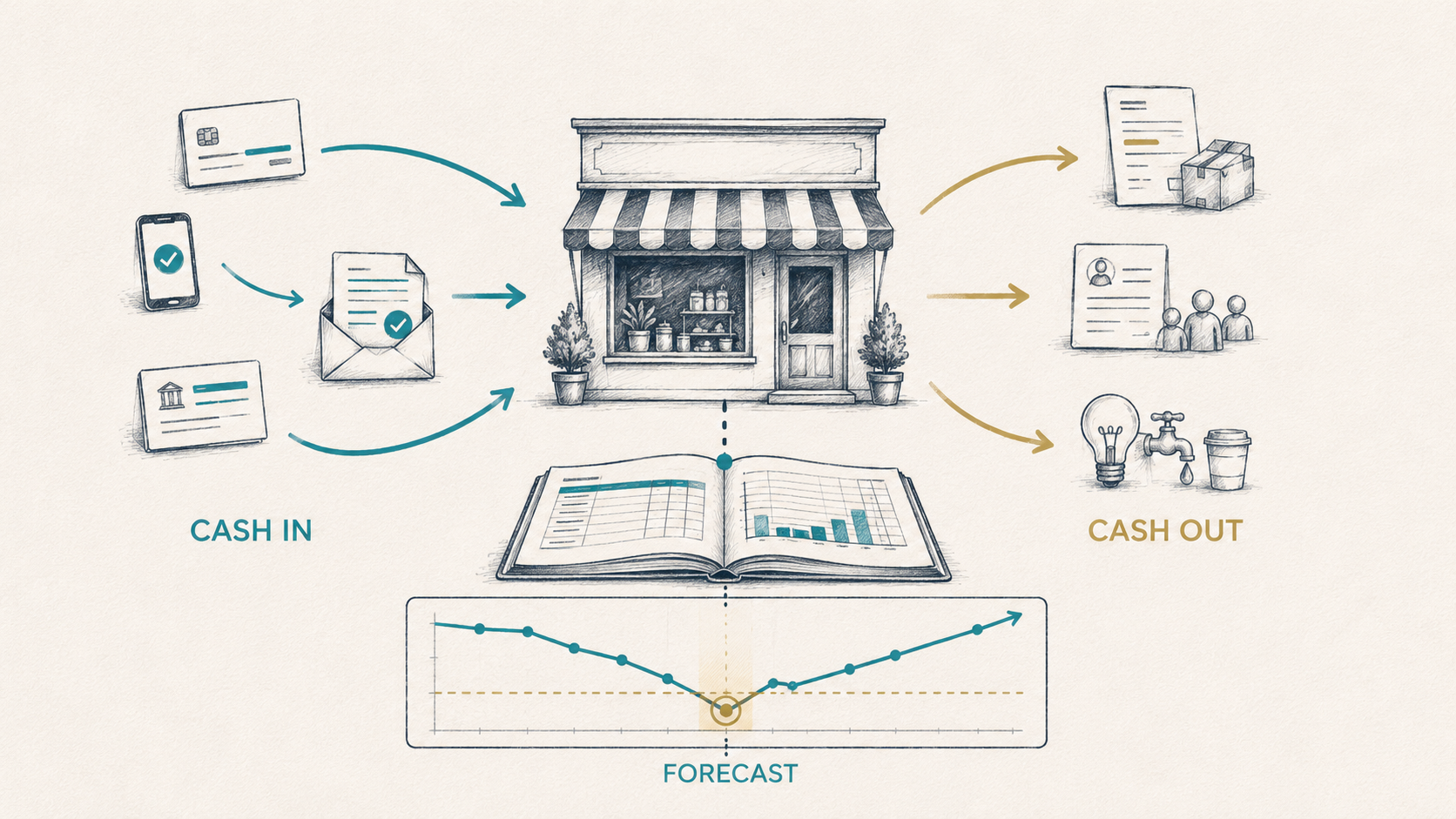
Cash flow is one of the clearest indicators of a business’s day-to-day financial health. A business may be profitable on paper but still struggle to pay suppliers, wages or other commitments if money is not arriving when it is needed.
This is where good bookkeeping becomes especially valuable. Accurate, current records cannot predict every future event, but they can reveal patterns, highlight pressure points and provide the information needed to prepare a meaningful cash flow forecast. That gives business owners more time to respond, before a small concern becomes an unnecessary headache.
What is cash flow?
Cash flow is the movement of money into and out of a business. Incoming cash may include customer payments and sales, while outgoing cash includes supplier bills, wages, superannuation, loan repayments and operating expenses.
Positive cash flow means more money is entering the business than leaving it during a particular period. Negative cash flow means outgoing payments are greater than incoming funds. A temporary shortfall is not always a sign that a business is failing, but it needs to be understood and planned for.
The Australian Government’s cash flow guidance explains that a cash flow statement can help identify payment cycles and seasonal trends, forecast possible shortages or surpluses, and plan for upcoming payments.
Profit and cash flow are not the same
One of the most common sources of confusion is the difference between profit and available cash.
A sale may appear as income in the accounts before the customer has paid the invoice. The business may therefore report a profit while still waiting for the cash. At the same time, wages, supplier bills and other expenses may already be due.
This timing gap is why reviewing the bank balance alone does not provide the full picture. Business owners also need accurate information about unpaid invoices, upcoming bills and recurring commitments. When bookkeeping falls behind, developing pressure can be difficult to see until the business has fewer options available.
How good bookkeeping helps identify problems earlier
1. It keeps the financial picture current
Regular bookkeeping records income, expenses and bank transactions while the information is still relevant, providing a more dependable basis for cash flow decisions.
2. It shows which customers still owe money
An up-to-date accounts receivable report shows outstanding invoices and how long they have been overdue, allowing the business to follow up earlier.
3. It tracks upcoming supplier payments
Accurate accounts payable records show what the business owes and when payments are expected, reducing the risk of several bills becoming a surprise.
4. Regular reconciliation identifies missing information
Bank reconciliation confirms that bookkeeping records agree with the business bank account. It can reveal duplicated entries, missing payments or transactions requiring further investigation.
5. Financial reports reveal patterns
Consistent reporting helps reveal increasing costs, narrowing margins or slower customer payments, even before the immediate bank balance appears critical.
6. Accurate records support cash flow forecasting
A cash flow forecast estimates the timing of future income and expenses. Reliable bookkeeping provides the actual figures and recent trends needed to prepare more realistic assumptions.
Early warning signs to watch
Cash flow pressure may be developing if a business is:
allowing overdue invoices to accumulate
using personal funds to cover normal business expenses
repeatedly delaying important payments
experiencing a falling bank balance despite steady sales
unsure how much is available after upcoming commitments
These signs do not always mean the business is in serious difficulty. They do indicate that the records, payment timing and short-term forecast should be reviewed promptly.
Practical ways to stay ahead
Small businesses can improve cash flow visibility by:
updating bookkeeping and bank reconciliations regularly
issuing invoices promptly and following up overdue accounts
keeping supplier bills and due dates current
reviewing payroll, superannuation and recurring expenses before each payment cycle
maintaining a short-term cash flow forecast
discussing emerging concerns early with an accountant or appropriate adviser
Good bookkeeping does not remove every business challenge. It provides clearer information, allowing decisions to be made earlier and with greater confidence.
Frequently asked questions
How often should a small business review cash flow?
Many small businesses benefit from reviewing cash flow at least weekly. Those with tight margins, seasonal income or high transaction volumes may need to monitor it more frequently.
Can a profitable business still have cash flow problems?
Yes. Profit records income and expenses, while cash flow reflects when money is actually received or paid. Slow-paying customers or several expenses falling due together can create a shortage even when the business is profitable.
Can bookkeeping predict future cash flow problems?
Bookkeeping cannot predict every unexpected event. However, accurate records can identify trends and provide the foundation for a cash flow forecast, helping a business recognise possible shortages earlier and consider its options.
Clearer records support better decisions
Cash flow is easier to manage when business records are current, unpaid invoices are visible and upcoming commitments are understood.
Alexsar Bookkeeping supports small and medium businesses with day-to-day bookkeeping, bank reconciliation, accounts payable and receivable, payroll support and financial reporting. Based in the Hills District, Sydney, we work with businesses locally and across Australia to keep their records organised and their financial position easier to understand.
Contact Alexsar Bookkeeping to discuss the bookkeeping and reporting support your business may need.
This article provides general information only and does not constitute financial, tax or legal advice. For advice specific to your business, speak with an appropriately qualified professional.
Clear Books. Clear Direction.
