
Payday Super Is Now in Effect: What Small Businesses Need to Know
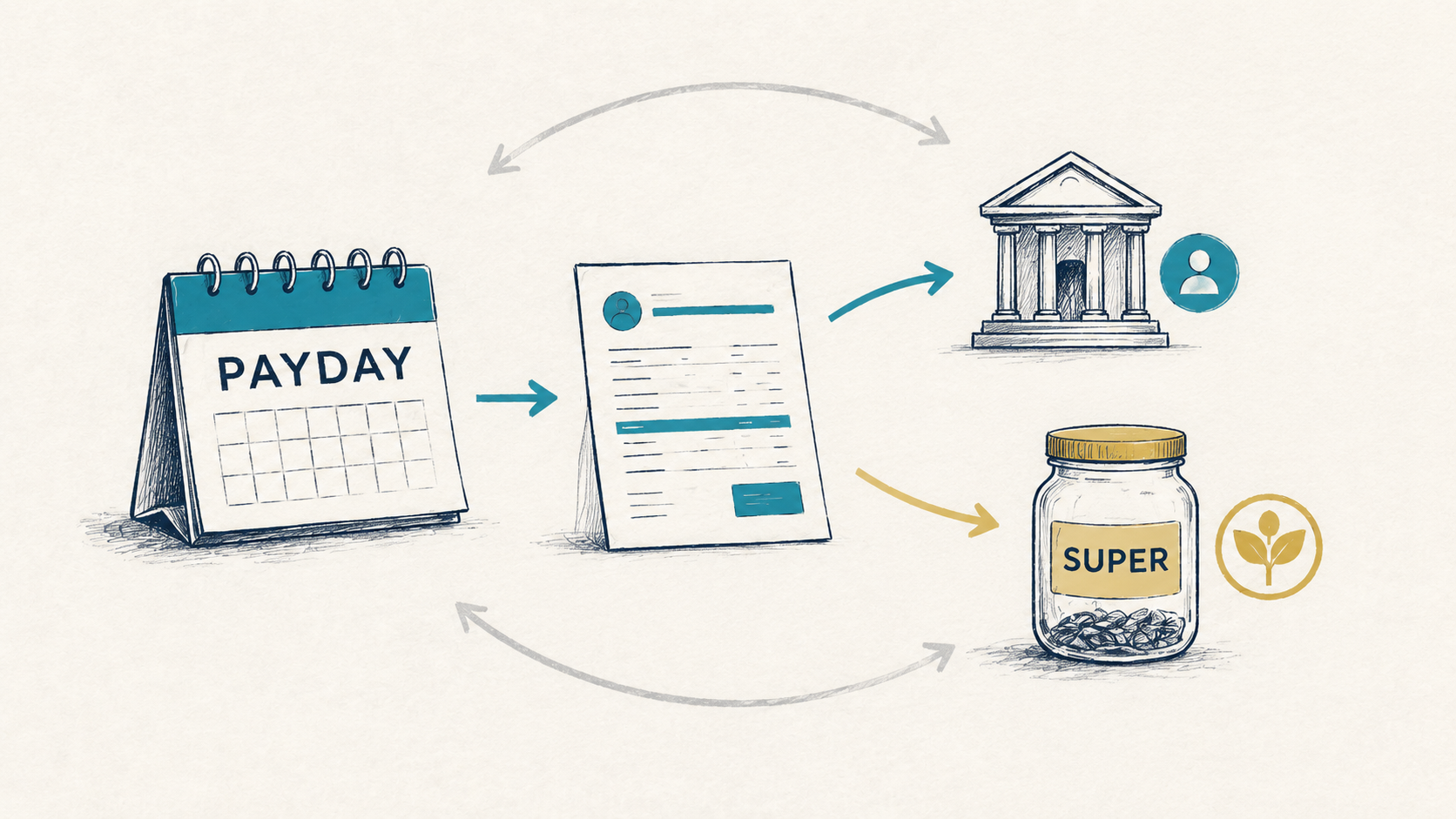
Payday Super is now part of the regular payroll cycle for Australian employers. From 1 July 2026, businesses generally need to pay employees’ superannuation with each pay run rather than treating it as a separate quarterly task.
For small businesses, this change makes accurate payroll records, reliable payment processes and regular reconciliation more important than ever. Here is a practical overview of what Payday Super means and the checks businesses should build into each pay cycle.
What is Payday Super?
Payday Super requires employers to make super guarantee contributions for eligible employees each time wages are paid. According to the Australian Taxation Office, contributions generally need to be deposited into the employee’s super fund within 7 business days of payday.
This means a weekly, fortnightly or monthly payroll will usually have a corresponding super payment. Businesses therefore need to consider super as part of every pay run, not as an amount to address at the end of the quarter.
Why does Payday Super affect bookkeeping?
Payday Super brings payroll, super payments, bookkeeping and cash flow closer together.
More frequent payments create more transactions to monitor and reconcile. If employee information is incorrect, a payment is rejected, or a super payment batch is approved too late, the business may have less time to identify and resolve the issue.
It can also affect cash flow. Businesses that previously held super amounts until the quarterly due date now need sufficient funds available with each payroll cycle. Keeping financial records up to date makes it easier to understand upcoming commitments and avoid unexpected strain on the business bank account.
A practical Payday Super checklist
Small businesses should consider adding the following checks to their payroll process:
1. Review employee details
Check that each employee’s name, tax file information and nominated super fund details are complete and current. Incorrect information can delay or prevent a contribution from being allocated.
2. Confirm how super payments are processed
Make sure your payroll software or super payment provider is properly configured. If your business previously used the Small Business Superannuation Clearing House, confirm that a suitable replacement process is now operating.
3. Process super with every pay run
Include super as a standard part of the payroll workflow. Allow enough processing time for the contribution to reach the employee’s fund within the required timeframe, not simply leave your business bank account.
4. Monitor rejected or returned payments
Do not assume that approving a payment means it has been successfully received. Check for errors, returned contributions and requests for corrected employee information, then address them promptly.
5. Reconcile payroll and super regularly
Compare payroll reports, super payment records and bank transactions. Regular reconciliation can help identify missing, duplicated or incorrectly recorded payments before they accumulate.
6. Plan for the cash-flow impact
Include super in short-term cash-flow planning for every weekly, fortnightly or monthly payroll. This provides a clearer picture of the amount genuinely available for other business expenses.
How bookkeeping support can help
A clear, repeatable payroll process can reduce administration and make it easier to identify issues early. A bookkeeper can assist with maintaining payroll records, processing routine payroll information, reconciling wage and super transactions, and keeping reports organised for your accountant or registered adviser.
For businesses using Xero, MYOB, QuickBooks or other cloud-based systems, the right setup and regular review can also make payroll information easier to follow.
Frequently asked questions
When did Payday Super start in Australia?
Payday Super commenced on 1 July 2026. It applies to payroll cycles from that date, subject to the detailed rules and any applicable exceptions.
How quickly must super reach an employee’s fund?
In most cases, the contribution must be received by the employee’s super fund within seven business days of payday. Businesses should allow for processing time when scheduling payments.
Does Payday Super make quarterly bookkeeping unnecessary?
No. Regular bookkeeping and reconciliation remain important. Payday Super simply means super payments now form part of each payroll cycle rather than being handled only as a quarterly payment.
Clear payroll records. Clearer direction.
Payday Super is easier to manage when payroll records are current, payment responsibilities are clear, and transactions are reconciled regularly.
Alexsar Bookkeeping supports small and medium businesses with practical payroll and bookkeeping assistance. Based in the Hills District, Sydney, we work with businesses locally and across Australia to keep their financial records organised, accurate and easy to understand.
Contact Alexsar Bookkeeping to discuss how we can support your day-to-day payroll and bookkeeping processes.
This article provides general information only and does not constitute tax, legal or financial advice. For guidance specific to your obligations, refer to the ATO or speak with a registered tax or BAS agent.
Clear Books. Clear Direction.
Sources and further reading
For further information, visit:
Australian Taxation Office: About Payday Super
Australian Taxation Office: Payday Super payment deadlines
Australian Taxation Office: Payday Super checklist for employers
