
Key Financial Reports Every Small Business Owner Should Understand
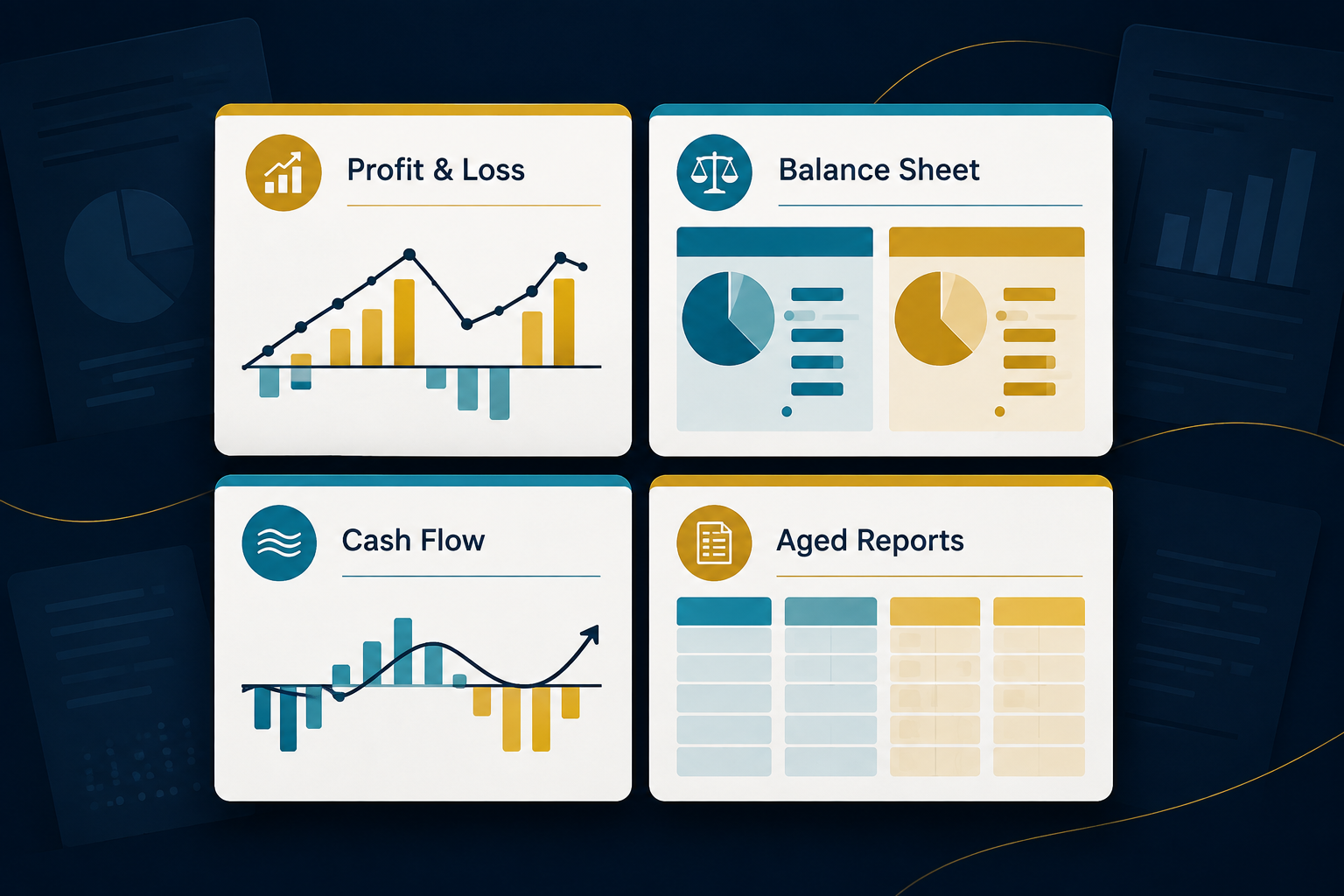
Financial reports provide valuable information about how a business is performing, what it owns and owes, and how money is moving through the business. However, these reports are only useful when business owners understand what the figures mean and how they relate to everyday decisions.
Regularly reviewing key financial reports can help you monitor profitability, manage cash flow, identify outstanding payments and plan with greater confidence. You do not need to be an accountant to understand that clear, accurate and up-to-date reports can give you a much better view of your business’s financial position.
Why financial reports matter
Financial reports turn day-to-day transactions into useful information about your business. They help you understand whether the business is profitable, how much cash is available, what customers owe and which bills need to be paid.
Reviewing reports regularly can also help identify unexpected expenses, overdue invoices, cash flow pressures and changes in business performance before they become larger problems. This allows you to make decisions using current financial information rather than relying only on the balance in your bank account.
For financial reports to be reliable, bookkeeping records must be accurate, complete and kept up to date.
Profit and loss statement
A profit and loss statement, also known as an income statement, summarises the income earned and expenses incurred over a specific period. It shows whether the business made a profit or a loss during that time.
Reviewing this report helps you understand where revenue is coming from, which expenses are increasing and whether the business is operating profitably. Comparing the report across different months, quarters or years can also reveal trends and changes in performance.
A profit does not necessarily mean the same amount of cash is available in the bank. Unpaid customer invoices, loan repayments, asset purchases and other transactions can affect cash flow differently, so the profit and loss statement should be reviewed alongside other financial reports.
Balance sheet
A balance sheet provides a snapshot of a business’s financial position at a specific point in time. It summarises what the business owns, what it owes and the owner’s equity in the business.
Assets may include cash, customer invoices awaiting payment, equipment and other resources owned by the business. Liabilities may include supplier bills, loans, credit cards, tax obligations and other amounts owed. The difference between total assets and total liabilities represents the business’s equity.
Reviewing the balance sheet can help you understand the financial strength of the business, monitor debt and identify changes in assets or liabilities over time. It can also highlight unusual balances or transactions that may need further investigation.
Cash flow report
A cash flow report shows how money has moved into and out of the business over a specific period. It helps explain where cash has come from, how it has been used and whether the business generated or used cash during that time.
This report may group cash movements into operating activities, investing activities and financing activities. Reviewing these areas can help you understand whether everyday operations are generating enough cash and how asset purchases, loans or owner contributions have affected the bank balance.
A business can be profitable but still experience cash flow pressure if customers pay late, large expenses fall due, or money is tied up elsewhere. Reviewing cash flow alongside the profit and loss statement and balance sheet provides a clearer picture of the business’s overall financial position.
Aged receivables report
An aged receivables report summarises the amounts customers owe your business and groups outstanding invoices according to how long they have remained unpaid. It commonly separates invoices into current, 30-day, 60-day and 90-day or older categories.
Reviewing this report helps you identify overdue invoices, prioritise payment follow-ups and understand how much money is tied up in outstanding accounts. It can also reveal customers who regularly pay late or have multiple unpaid invoices.
Keeping customer payments allocated correctly and regularly reviewing aged receivables support more effective credit control and more predictable cash flow.
Aged payables report
An aged payables report summarises the amounts your business owes suppliers and groups outstanding bills according to when they are due or how long they have been overdue. It provides a clear view of upcoming payment obligations and unpaid supplier accounts.
Reviewing this report helps you plan payments, avoid missed due dates and manage cash flow more effectively. It can also help identify duplicate bills, incorrect balances or expenses that have not been recorded properly.
Keeping supplier bills accurate and reviewing aged payables regularly can support stronger supplier relationships and help ensure sufficient funds are available when payments fall due.
How often should financial reports be reviewed?
The appropriate review frequency depends on the size and activity of the business. However, many small businesses benefit from reviewing their key financial reports at least monthly.
Monthly reviews make it easier to compare actual results with previous periods or budgets, identify overdue invoices and upcoming bills, and respond to changes in profitability or cash flow. Businesses with higher transaction volumes or tighter cash flow may need to review certain reports, such as aged receivables, aged payables and cash flow reports, more frequently.
Reports should be prepared using reconciled and up-to-date bookkeeping records. Reviewing inaccurate or incomplete figures can lead to poor decisions and may hide issues that require attention.
How Alexsar can help with financial reporting
At Alexsar Bookkeeping, we help small and medium businesses maintain accurate, organised and up-to-date records so their financial reports provide meaningful information.
We can prepare and review profit and loss statements, balance sheets, cash flow reports, and aged receivables and payables reports. Clear and regular reporting can help you better understand business performance, monitor cash flow and make more informed decisions.
Need clearer financial reports for your business? Contact us to discuss how Alexsar can support you.
